Outdoor Lighting in Miami: What to Consider Before Choosing Fixtures
September 14, 2026
Outdoor lighting should reveal the property with intention. The goal is not to illuminate every surface equally. It is to make entrances, paths and gathering spaces useful while giving landscape and architecture a considered presence after dark.
At Light Miami, exterior lighting belongs to the same design conversation as the interior. What you see through a living-room window matters as much as the view from the driveway.

Decide what deserves attention
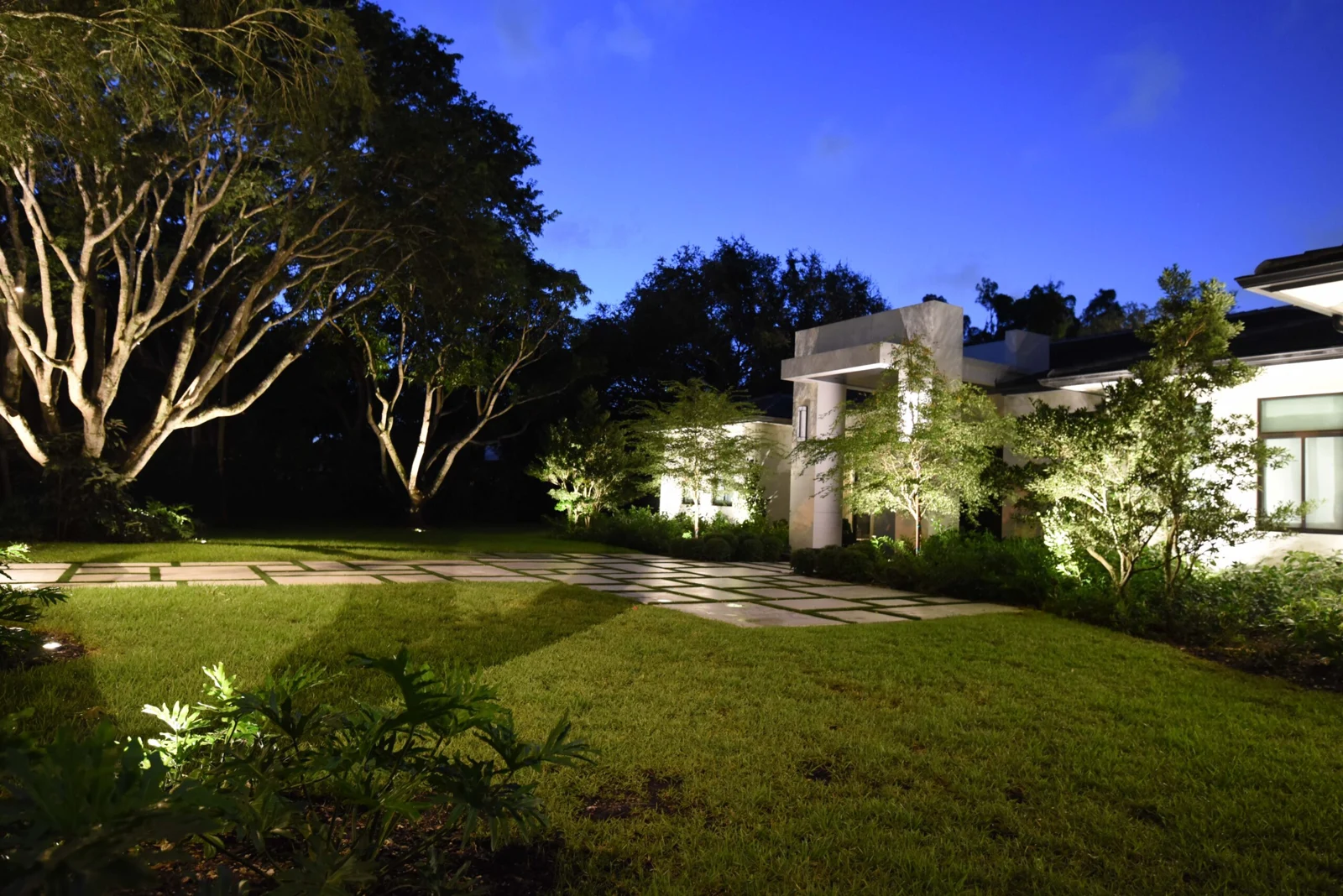
Start with the arrival sequence. Identify the entrance, changes in level, pathways and places where people gather. Then choose a limited number of landscape or architectural features to emphasize. A tree, textured wall or courtyard can become a focal point without lighting everything around it to the same intensity.
Preserve contrast. Areas of relative darkness help give illuminated features depth. Review the scene from inside the house, from outdoor seating and from neighboring viewpoints.

Match each fixture to its role
Path lighting, wall lighting and tree lighting require different distributions and mounting positions. A small fixture with an appropriate optic may produce a better result than a brighter fixture aimed broadly across the property.
Explore Auroralight for landscape-lighting references, BEGA for architectural exterior ideas, and ERCO for controlled architectural accents. These are starting points for selection; confirm the exact model’s output, distribution and installation requirements.
Consider exposure and maintenance before appearance
A sheltered terrace and an exposed coastal garden present different conditions. Discuss moisture, salt exposure, irrigation, drainage and cleaning access with the project team. A fixture’s water-protection rating does not, by itself, establish resistance to corrosion or suitability for every coastal installation.
Review the manufacturer’s installation instructions, finish guidance and warranty conditions. Keep drivers, transformers and connections accessible for servicing. In-ground fixtures need particular attention to installation and drainage details; the surrounding construction is part of the solution.

Control glare from the places people actually use
Check what a person sees while seated, walking up steps or looking through a window. Aiming, shielding and mounting height can matter as much as output. Avoid relying on brightness alone to make a route feel clear.
An evening aiming session helps refine the finished result. Plant growth and changes in the landscape can make later adjustments worthwhile, so plan for maintenance from the beginning.
Use technical planning where it answers a question
For a larger layout, a photometric study can compare proposed fixture positions and calculated light levels on selected surfaces. It can help reveal uneven coverage or excessive light near a boundary. It does not replace a design review of atmosphere, glare or the visual effect on planting.
For coastal or environmentally sensitive locations, identify the project’s applicable requirements before ordering. Review any wildlife-related fixture claims against the exact configuration and installation conditions.

Treat controls as part of the experience
Separate everyday circulation lighting from decorative landscape accents where useful. Discuss operating schedules, dimming and how the system will respond when the terrace is in use. Coordinate the exterior scene with nearby interior lighting so the transition feels comfortable.
Plan the view from inside the home
Begin at the windows and doors you use most. From a living room, an illuminated tree or garden wall can give the view depth after sunset. From a bedroom, the same feature may need a different aiming position or operating schedule. Walk through the interior before finalizing exterior locations, and consider how window reflections change when indoor lights are on.
Coordinate the terrace with the adjacent room. Start with activities: dining, conversation, cooking and moving through the space. Our room-by-room home lighting guide explains how interior layers can support that transition. High-end lighting design considers the whole property, including what you see through the windows after dark.
Separate planting, architecture and circulation
A large tree, a facade and a path each call for a different visual decision. For a tree, decide whether the trunk, canopy or silhouette is the priority. For a wall, decide whether you want to emphasize texture or create a quieter background. Along a path, evaluate the walking surface and changes in level from a person’s direction of travel. One broad beam rarely answers all three questions well.
Do not select fixtures by wattage alone. Compare output, beam distribution, shielding and the intended mounting arrangement. A narrow beam may suit a specific accent, while a wider distribution may be useful for a larger surface. The exact choice depends on geometry and manufacturer data. Keep the fixture schedule connected to the purpose of each location.
Why coastal conditions deserve a separate review
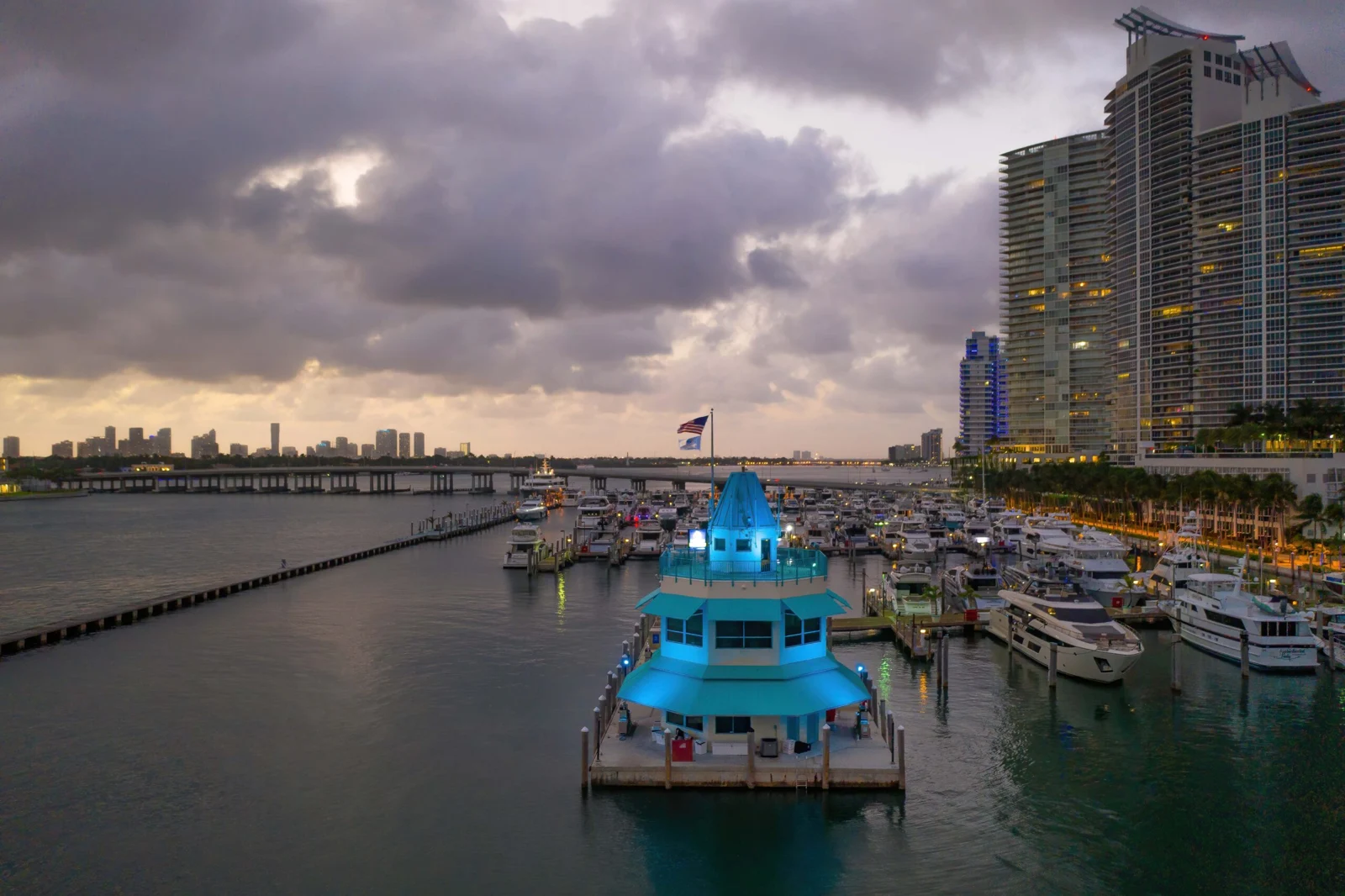
Exposure varies across a single property. A luminaire under a roof may face different conditions from one beside irrigation or near an open waterfront. Record where water can collect, where planting may cover a fitting, and how maintenance staff can reach it. Discuss finish selection and cleaning with the supplier using the actual location and conditions.
Low-voltage systems still need electrical coordination. Cable routes, circuit loading, transformer placement and manufacturer requirements affect the installation. Plan these details with the qualified installer before hardscape and landscaping make access difficult. A smaller supply voltage does not remove the need for suitable installation practices.
Six project references, six different settings
The photographs throughout this guide come from six individual Miami Outdoor Lighting project pages. Together, they provide references for residential arrival, planting, architecture, hospitality and a marina setting. Follow each photograph or its caption to the original project page for more images. These references show visual approaches; they do not establish which fixture specification will suit your property.
Questions clients ask about outdoor lighting in Miami
How bright should the garden be?
Start with what needs to be seen and from where. Circulation, dining and a decorative tree do not necessarily need the same treatment. Compare the balance between areas, review glare from seating and windows, and identify project-specific performance criteria where calculations are needed. More output is not automatically a better design.
Can outdoor lighting work with indoor scenes?
Yes, when the selected control system and equipment support the intended arrangement. Describe the scenes first: an evening meal, a quiet terrace or an arrival after dark. Then check switching, dimming and scheduling requirements. Keep useful circulation lighting available even when decorative accents are reduced.
Is a photometric plan only for commercial sites?
No. Residential projects can also benefit when the team needs to evaluate coverage, compare fixture options or understand how mounting positions affect a particular surface. A study should answer a defined question. It complements design judgment and on-site review rather than replacing them.
What happens after installation?
Allow time for an evening review. Check aiming from the entrance, seating areas and interior viewpoints. Revisit the scene as plants grow or furniture changes. Keep a record of fixture models and control settings so future service work can preserve the original intent.
Look at real outdoor examples
For landscape and architectural project references, visit Miami Outdoor Lighting in a new tab. Its portfolio can help you describe the mood, scale and areas of emphasis you want to discuss. Those project references are distinct from the conceptual illustrations in this guide.
Start with our Miami outdoor lighting page, or tell Light Miami about your project. Share a site plan, photos, preferred views and any known installation constraints. We can discuss the outdoor scheme alongside your interior lighting and fixture selections.