How to Plan Lighting for a Miami Home: A Room-by-Room Guide
September 13, 2026
Good lighting begins with how you want a room to feel—and what you need to do in it. A beautiful pendant can define a dining space, but it cannot solve every lighting need around it. In a thoughtfully designed home, decorative fixtures, architectural light and controls work together.
For a Miami residence, that conversation should include the relationship between indoors and outdoors. A living room opening onto a terrace deserves one coordinated lighting approach, even though the fixtures and installation conditions differ.
 © Frederic Friedmann
Start with the furniture, not a grid of downlights
Mark the dining table, seating, artwork, kitchen counters and circulation routes before choosing ceiling locations. A regular grid may look tidy on a drawing while placing light behind someone preparing food or directly in the eyes of someone reclining on a sofa.
Build three layers: ambient light for the room, task light where activities happen, and accent light for selected objects or surfaces. Each layer should have a purpose. Not every room needs every fixture type.
Living rooms: give the eye somewhere to rest
Combine comfortable background light with a reading light and a few deliberate accents. Consider the view from the sofa: an exposed bright source can be distracting even when the room is not especially bright. Check reflections in televisions and glass, too.
A sculptural fixture from Davide Groppi or Flos can be a starting point for the decorative layer. For lighting artwork or architectural surfaces, explore ERCO. The right choice depends on the specific fixture, its beam and the room—not simply the brand.
 © Frederic Friedmann
Kitchens: put light on the work
Plan illumination at counters, the sink and the island. Consider how upper cabinets and people standing at the counter will cast shadows. Pendants can bring scale and character to an island, while a separate task-lighting layer supports preparation and cleaning.
Confirm mounting details, accessible drivers and dimming compatibility before cabinetry is finalized. Look at GM Lighting for integrated-lighting ideas and USAI Lighting for recessed-lighting options. Compare exact specifications rather than assuming all fixtures in a family behave alike.
Dining rooms: compose around the table
A chandelier or pendant should relate to the table, ceiling and surrounding architecture. Review its dimensions from both seated and standing viewpoints. A large decorative object does not necessarily provide useful light across the tabletop.
Explore Barovier&Toso and Vistosi as decorative references. Keep the dining layer separately controllable from nearby circulation lighting so the room can change from everyday use to an evening gathering.
 © Frederic Friedmann
Bedrooms and bathrooms: plan for different moments
In a bedroom, provide useful reading light and an easy way to reduce the overall level before sleep. Think through switching from the doorway and bedside. In a bathroom, consider the face at the mirror as well as the floor and shower; a ceiling downlight alone may create unwanted facial shadows. Select fixtures suitable for their actual installation location.
 © Frederic Friedmann
Connect the terrace without overpowering it
Look outside from the living room after dark. A few considered accents can give the view depth. Too much exterior light can compete with the interior and draw attention to the fixtures themselves. Our Miami outdoor lighting guide helps connect the two spaces.
 © Frederic Friedmann
What the apartment photographs illustrate
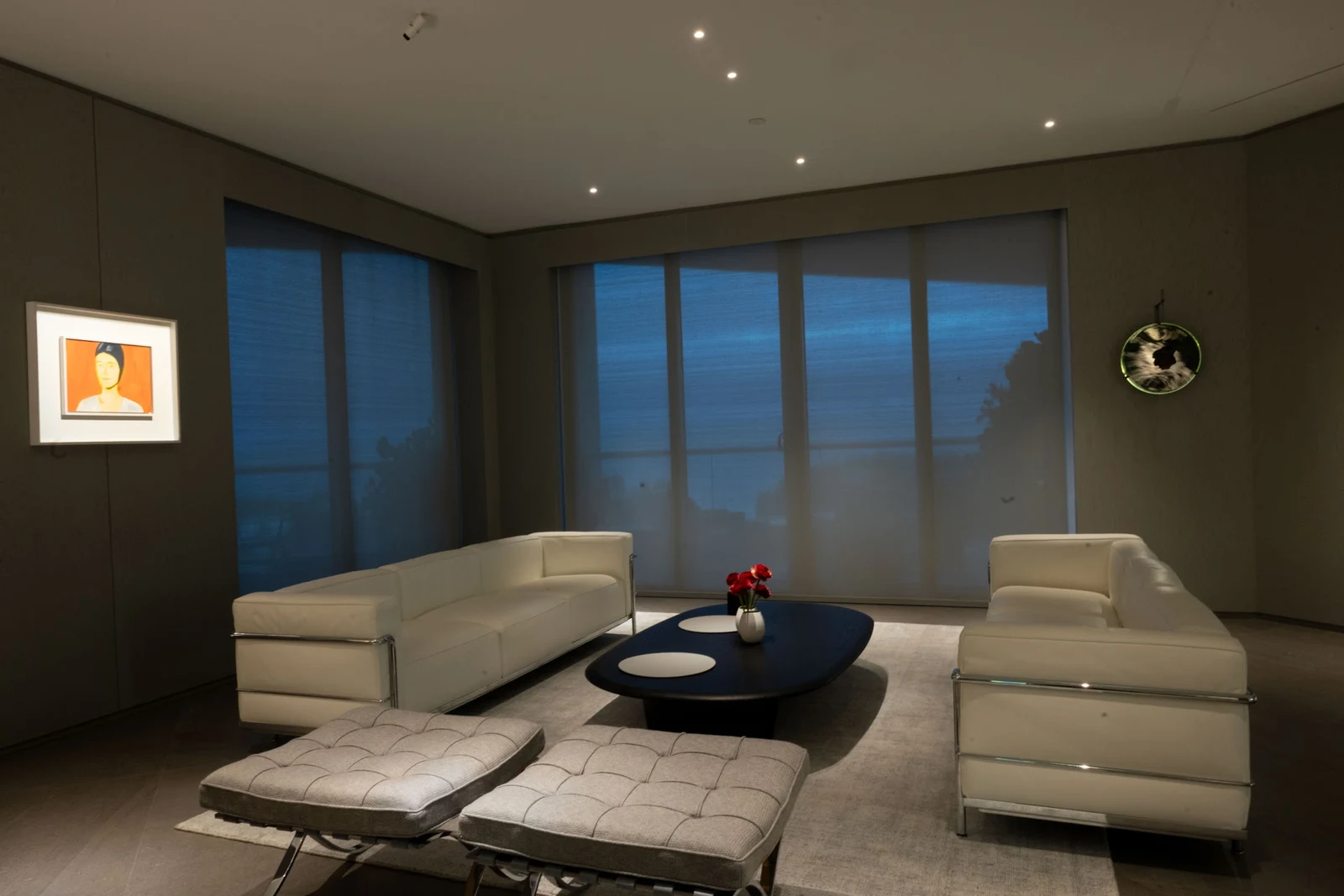
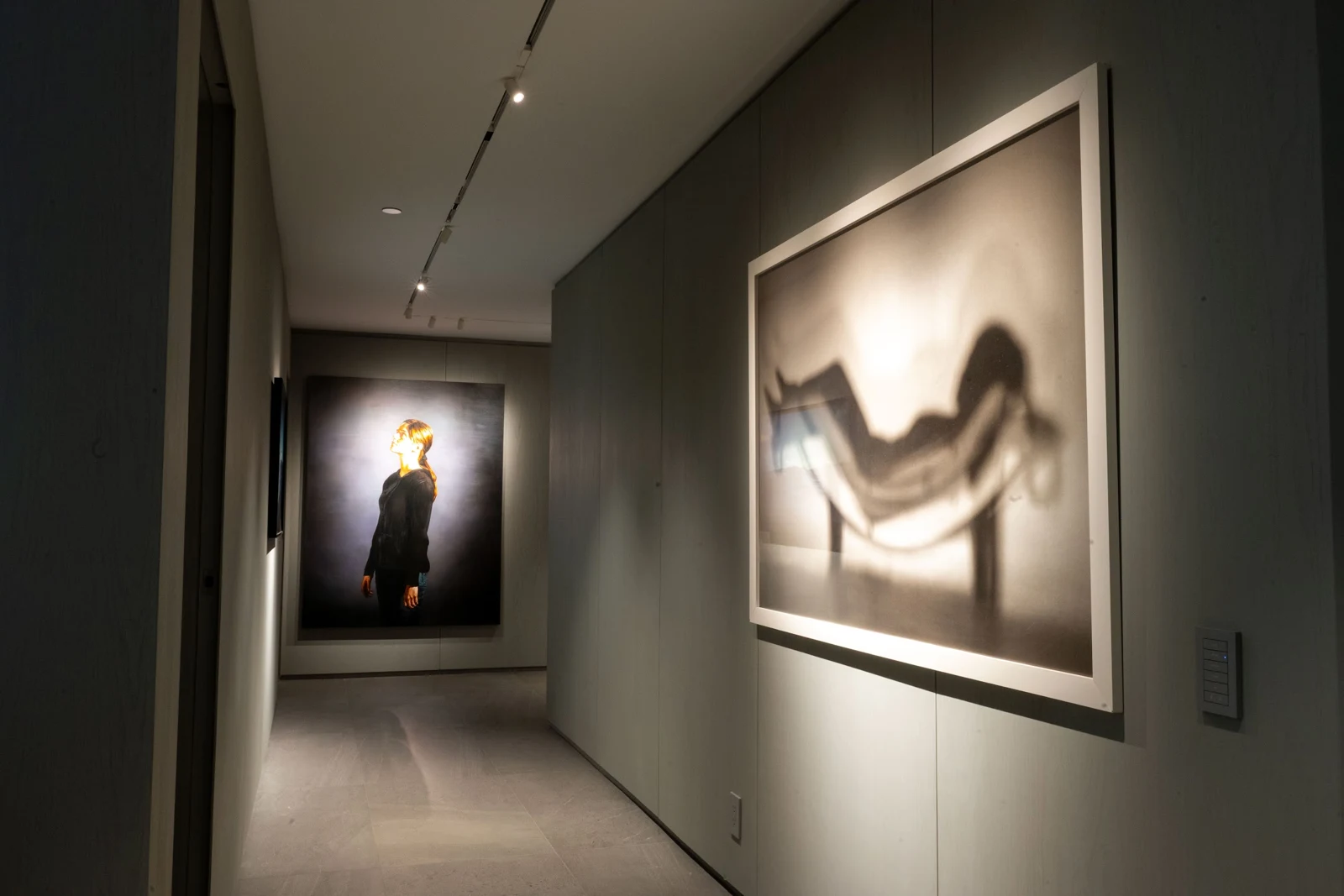
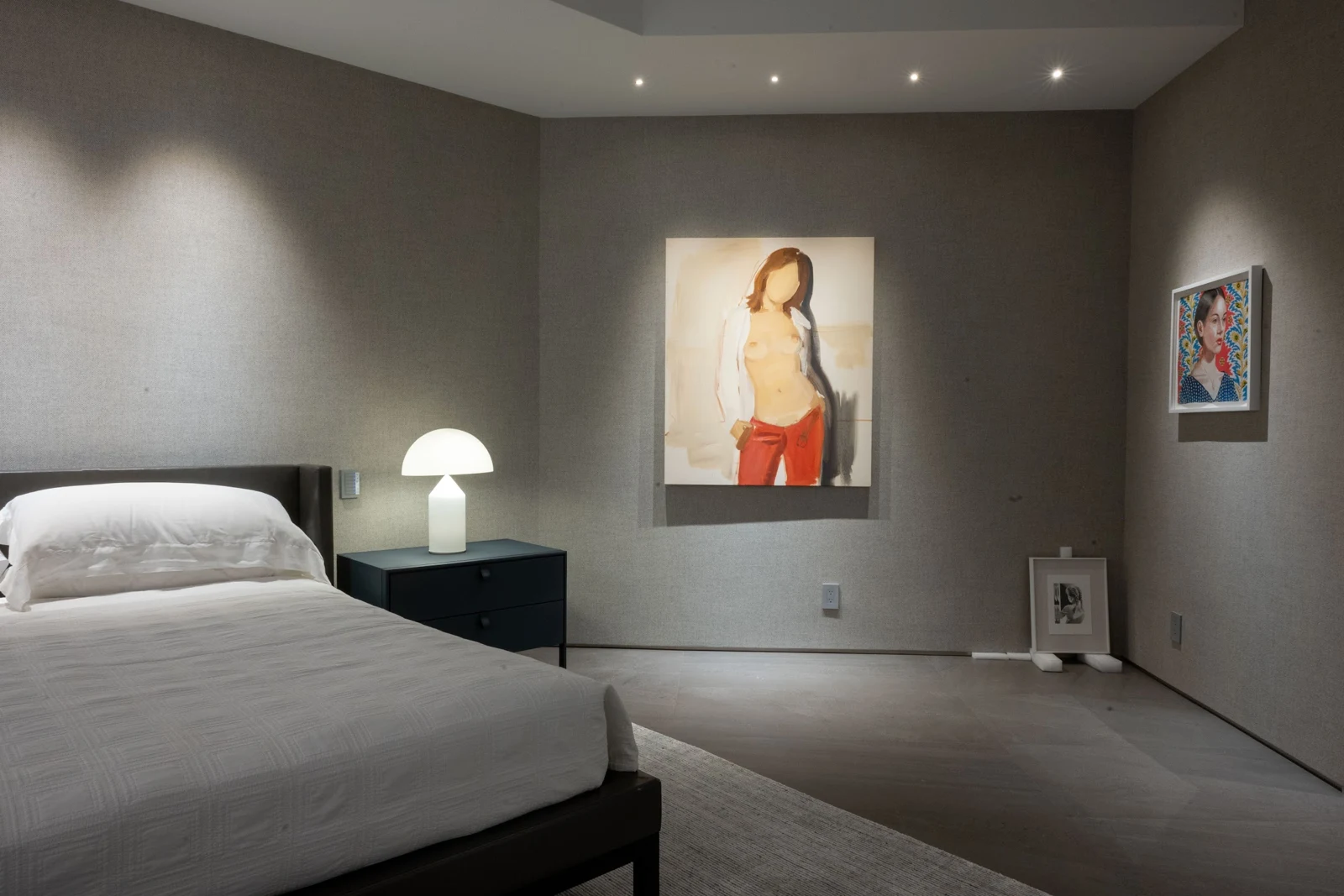
The apartment project photographed here shows several different lighting situations. In the living area, recessed ceiling fixtures sit within a composition that includes seating and illuminated artwork. In the hallway, track-mounted spotlights direct attention toward framed pieces. In the bedroom, a table lamp introduces another source of light beside the bed while ceiling lighting serves the surrounding space.
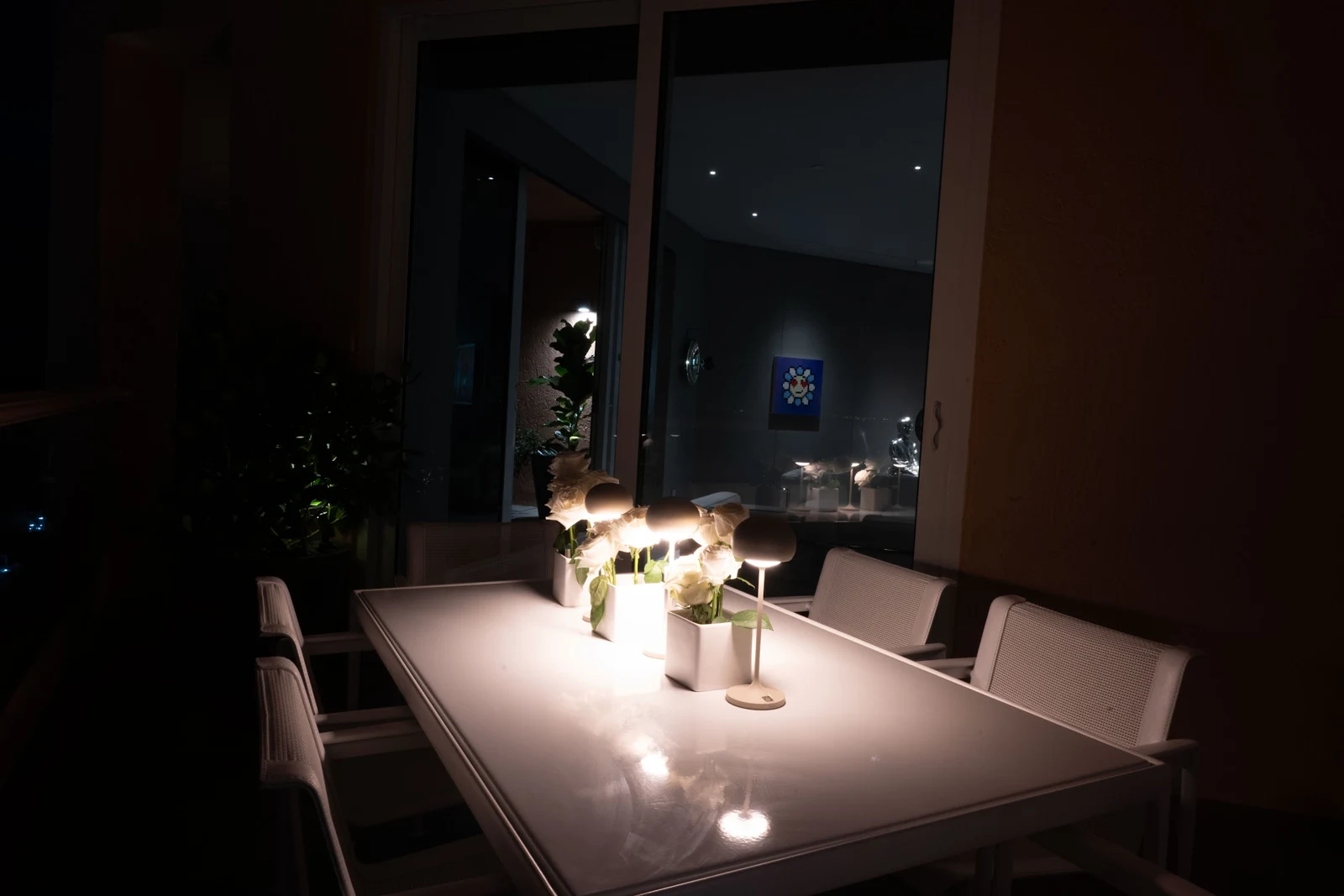
These photographs are useful references for discussing placement and visual emphasis. They are not measurements of light levels, and the brands linked in this guide are selection references rather than identifications of the fixtures shown. Photography: © Frederic Friedmann.
Questions to resolve before ordering home lighting
How many downlights does a room need?
There is no single fixture count that works for every room of a given size. Ceiling height, beam distribution, output, surface finishes and furniture all influence the result. Begin with the areas that need light, then compare a proposed layout against those needs. Where coverage is uncertain, a photometric study can help evaluate the arrangement before installation.
Should decorative and architectural lights use the same controls?
They can belong to the same control system while remaining separately adjustable. For example, the light above a dining table may need a different level from the lighting along an adjoining corridor. Establish the desired scenes first, then confirm that the selected drivers, dimmers and control system can deliver them together.
When should lighting design begin?
Begin while ceiling, furniture and cabinetry plans can still be coordinated. Recessed housings need space; integrated lighting needs mounting details and access for service. Early planning also allows time to review samples, compare finishes and clarify the effect of a proposed fixture before quantities are fixed.
What should you bring to a lighting consultation?
Bring scaled drawings, ceiling heights, a furniture plan and photographs of the existing space if available. Identify artwork, work surfaces and the views that matter most. Include your preferred atmosphere, control expectations and budget priorities. Together, these details make the conversation more useful than a list of fixture styles alone.
Make controls part of the design
Discuss scenes such as cooking, dining, reading and entertaining. Review color appearance across connected rooms, and test the chosen fixture, driver and dimmer combination. A specification sheet cannot replace every on-site judgment about comfort and atmosphere.
Bring a floor plan, ceiling heights, furniture layout and inspiration images to Light Miami’s lighting design services. We can discuss architectural and decorative selections together and identify where photometric planning would help answer a technical question.